Concrete poured for clay, water and the fault line under Flowertown.
Driveways and aprons, builder-driveway replacement, patios, pool decks, stamped and pervious concrete, walkways, shed and generator pads, foundations built to seismic D2, repair, leveling and removal across Summerville and the Lowcountry — by licensed, insured local crews who permit the apron with the right road authority and build the base for the ground that's actually here.
SC LLR residential specialty contractor · General liability and workers' comp · Free estimates · Written price good for 30 days
A concrete company built for the subdivisions of the 2000s and the ground under them
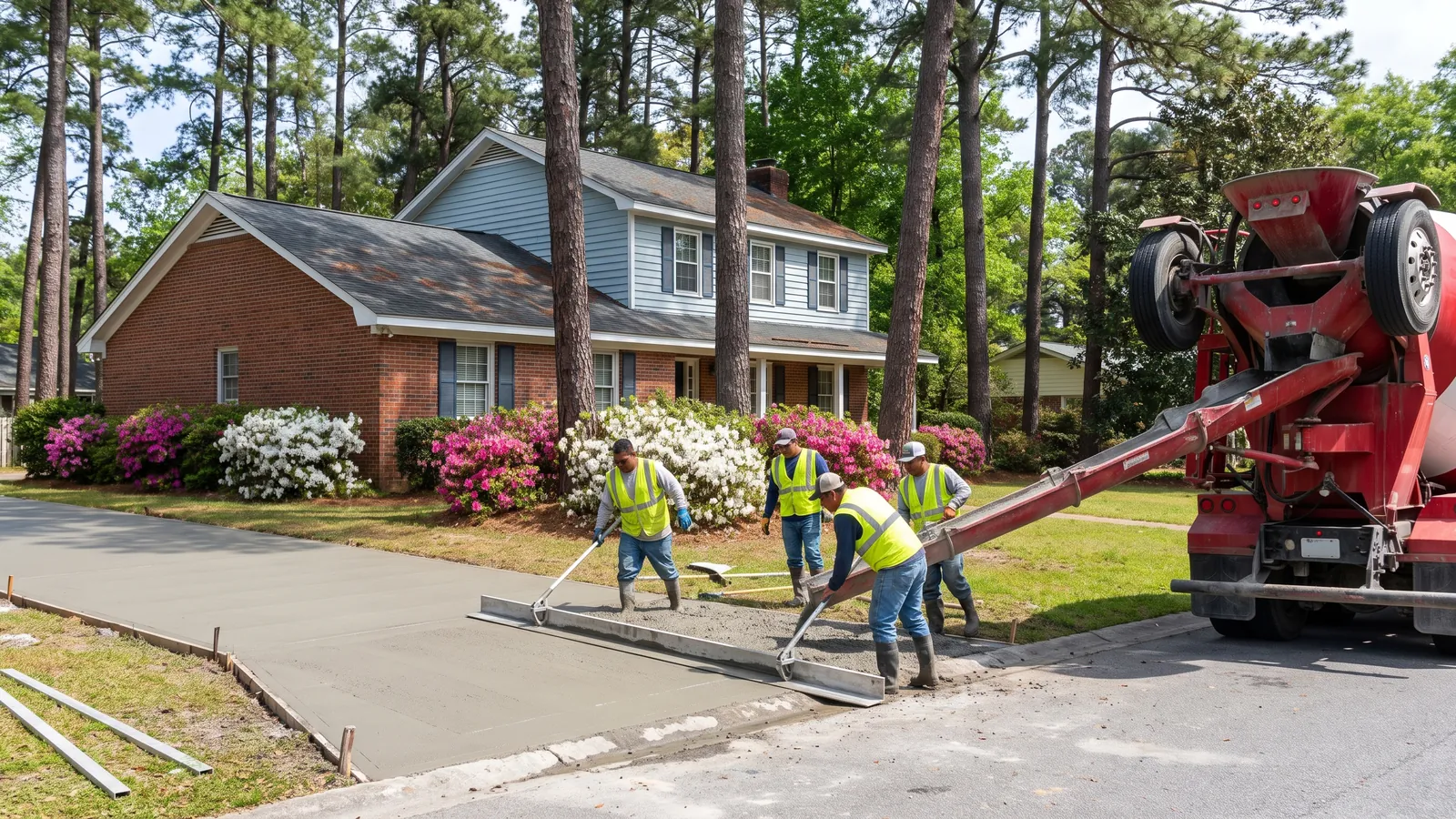
Concrete driveways
New, replaced and widened drives on a base built for a water table a foot down, reinforced for clay, and drawn to the Town's 12-foot curb-cut rule.
Driveways & pricing →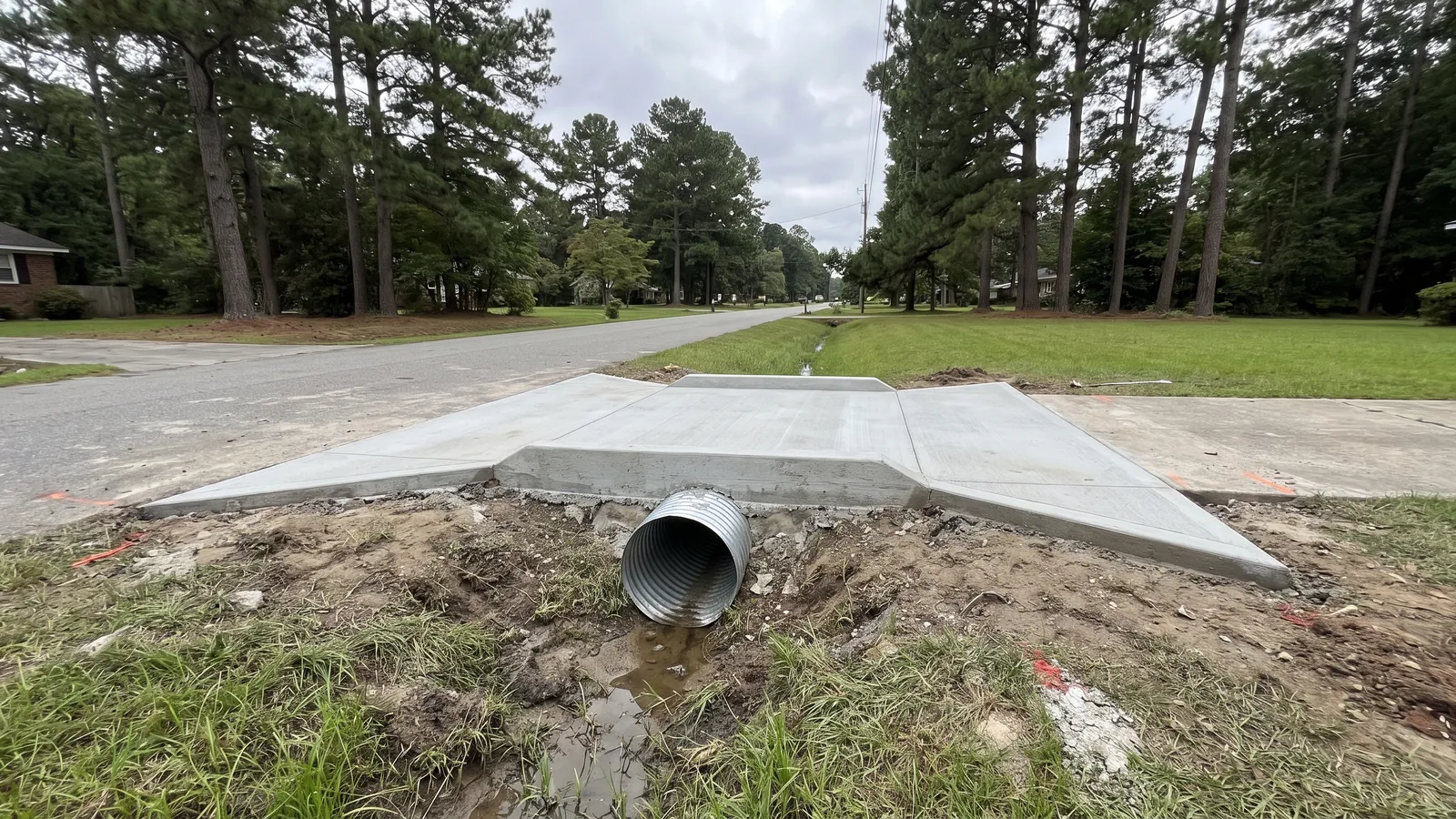
Aprons, culverts & encroachment permits
Town, county or SCDOT — we figure out whose road it is, pull the permit, set the pipe at the ditch invert and pour the apron to their spec.
Aprons & permits →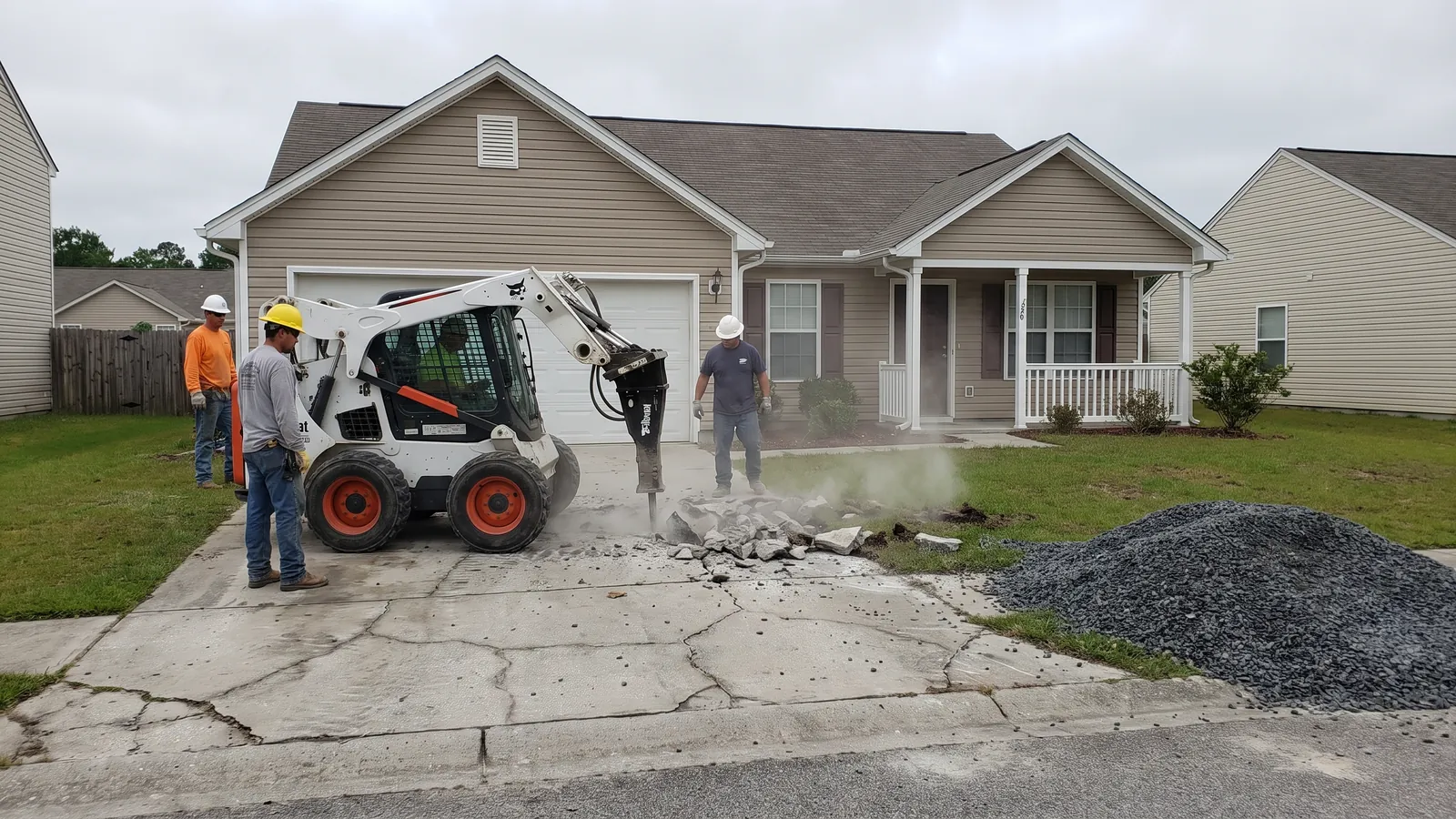
Builder driveway replacement
Half of Summerville's homes were built after 2000, and the thin builder slab on a scraped lot is the driveway we replace most. Base, drainage, thickness, steel.
Builder replacement →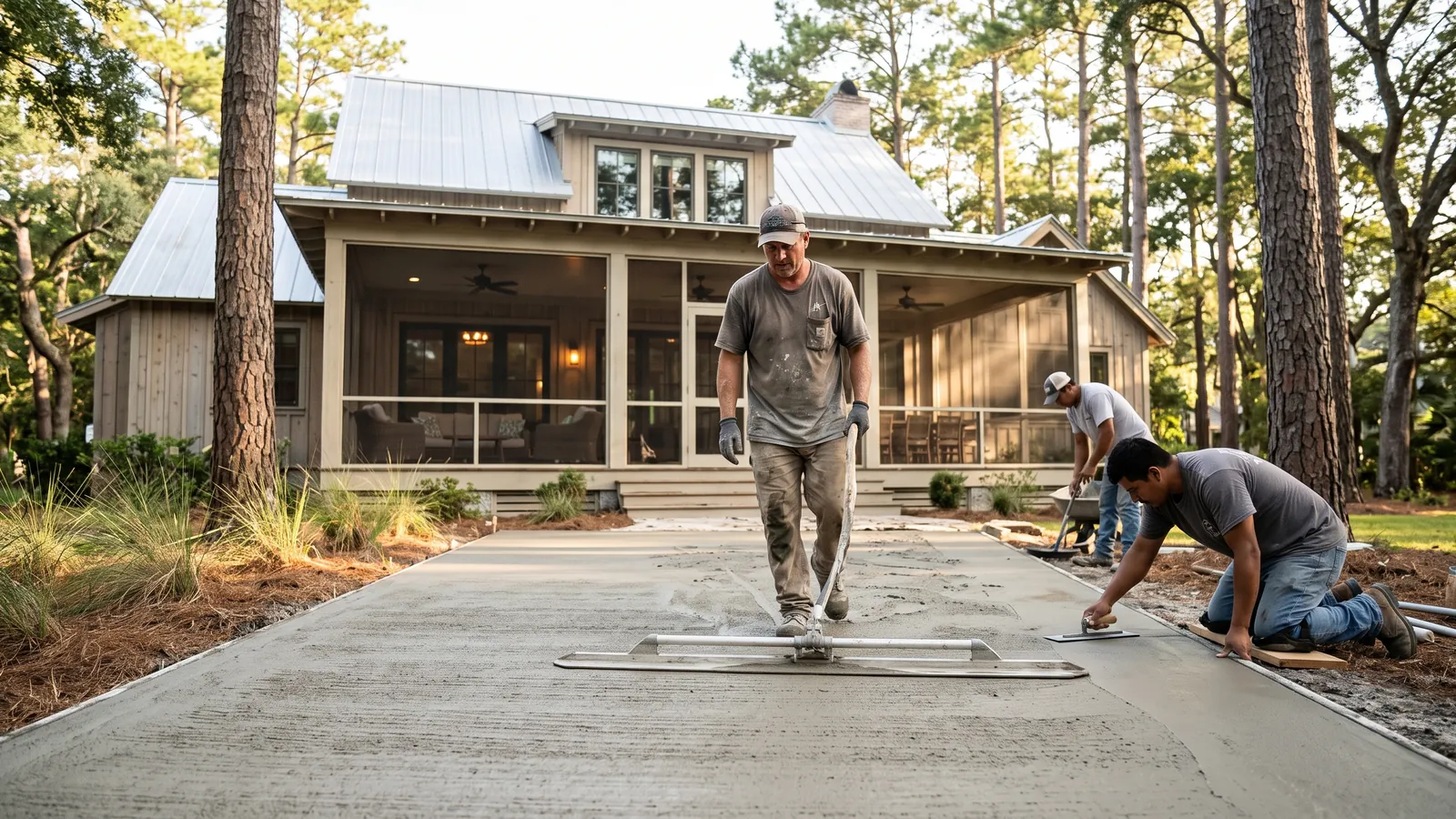
Concrete patios
Broom, smooth-bordered or stamped, graded away from the house, jointed for the heat, and counted against your lot coverage before we quote.
Patios →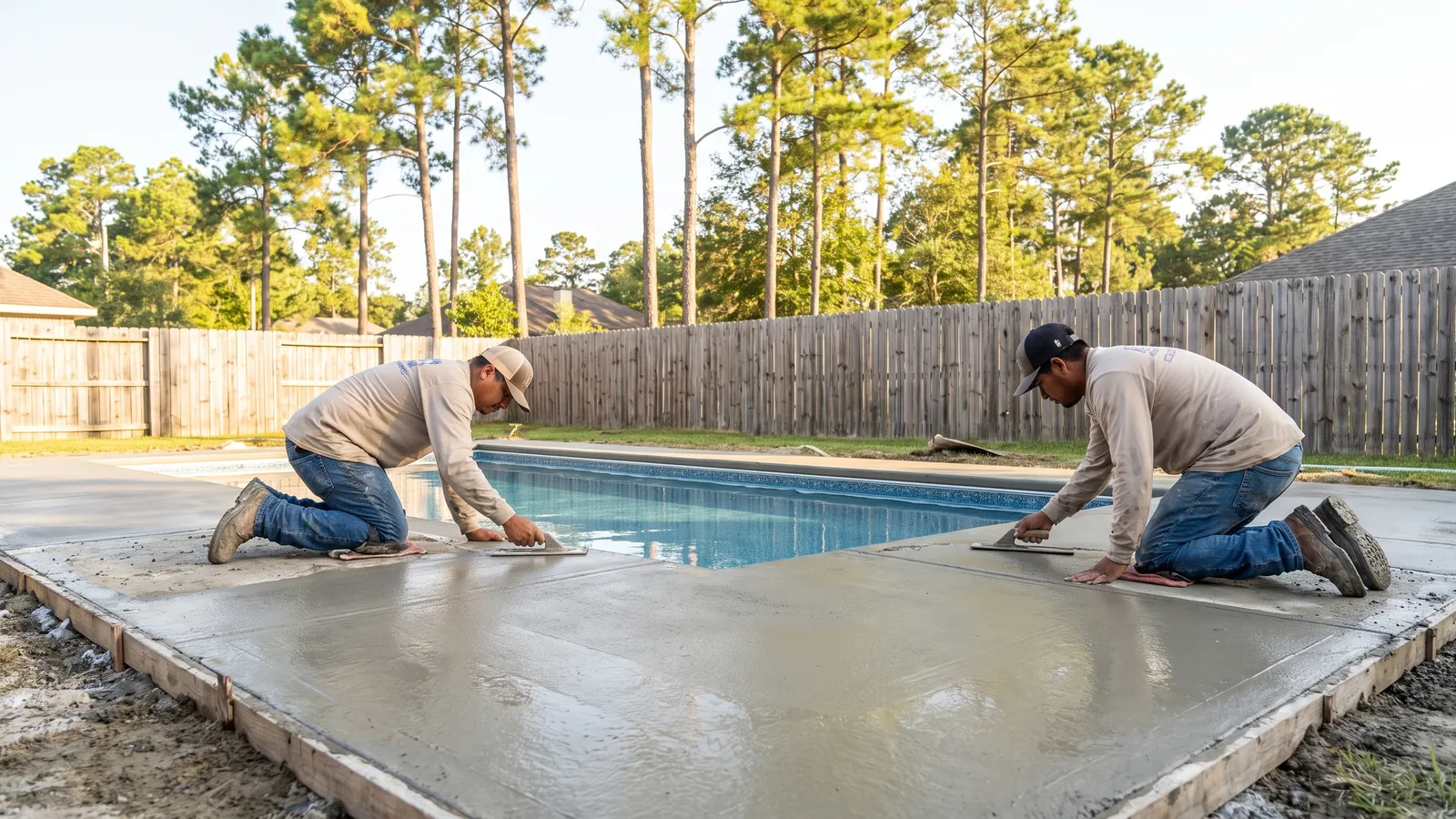
Pool decks
Cool-touch finishes, slope to the drains, an expansion joint at the coping, and the Town's pool-permit inspections.
Pool decks →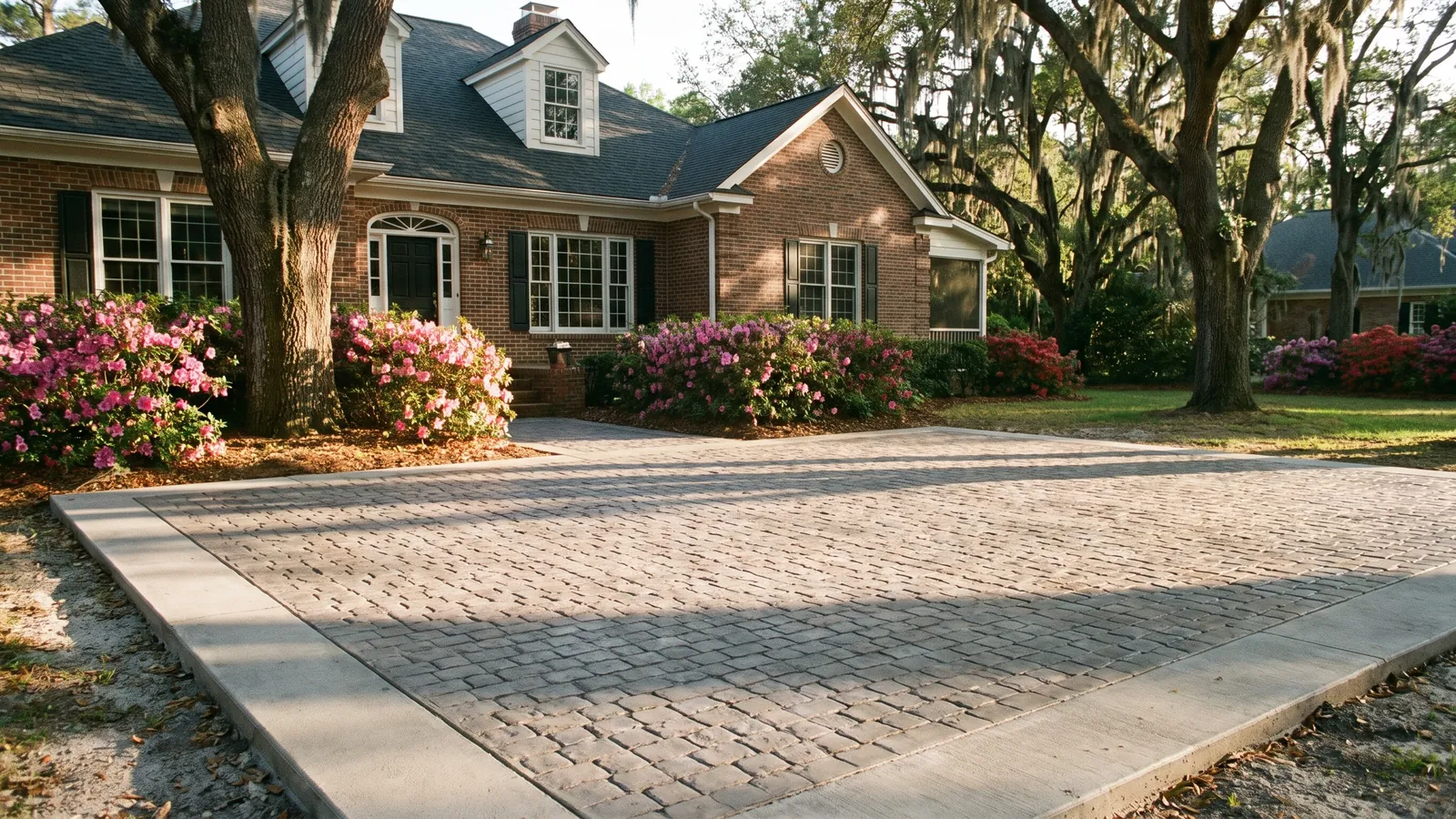
Stamped & decorative concrete
Cobblestone, slate and plank patterns with integral color and a sealer that holds up to 72 days a year over 90 degrees.
Stamped →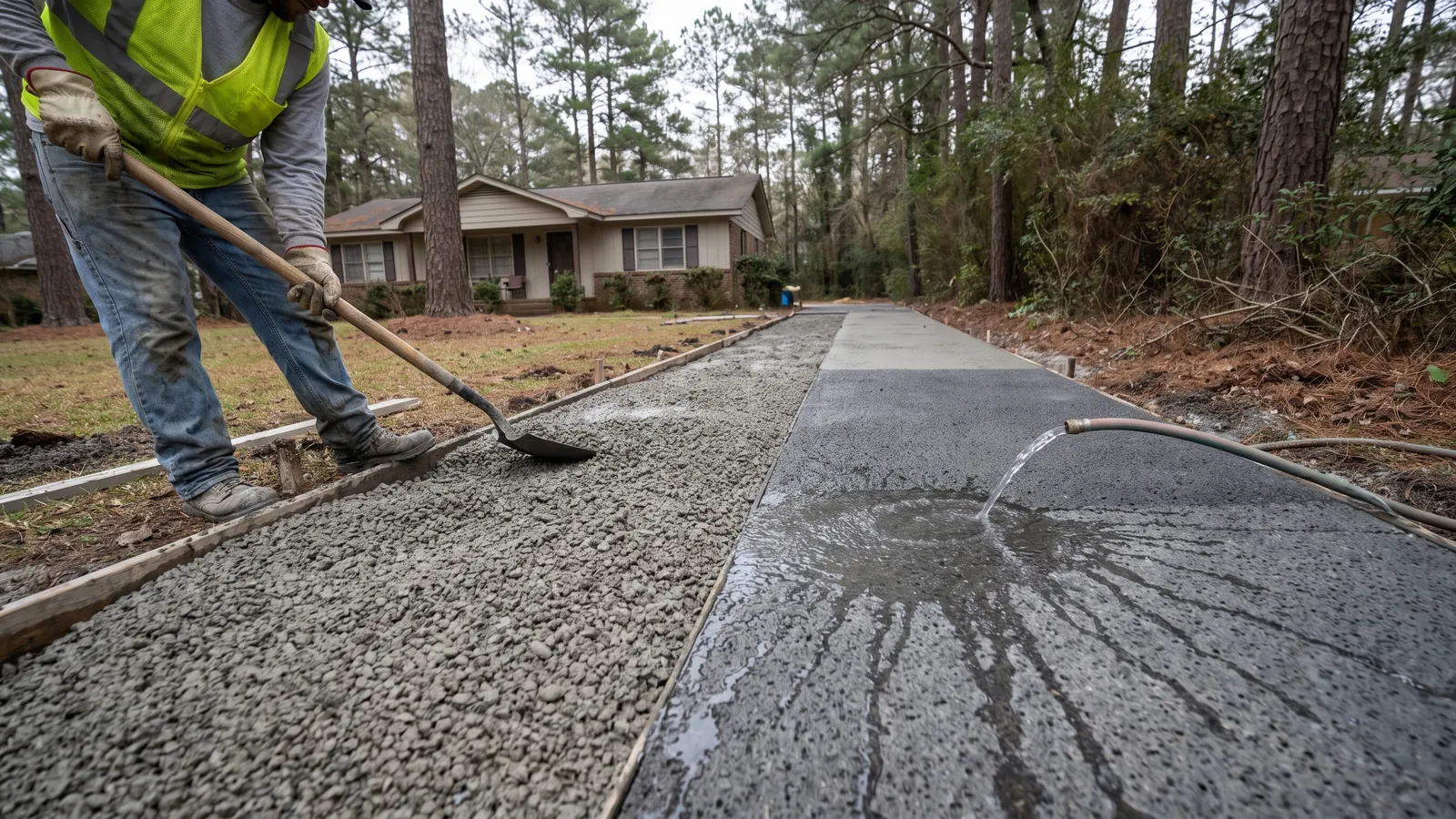
Pervious concrete & lot coverage
Excluded from the Town's impervious count: the way to add a driveway strip or a patio when the 30 percent cap says no.
Pervious concrete →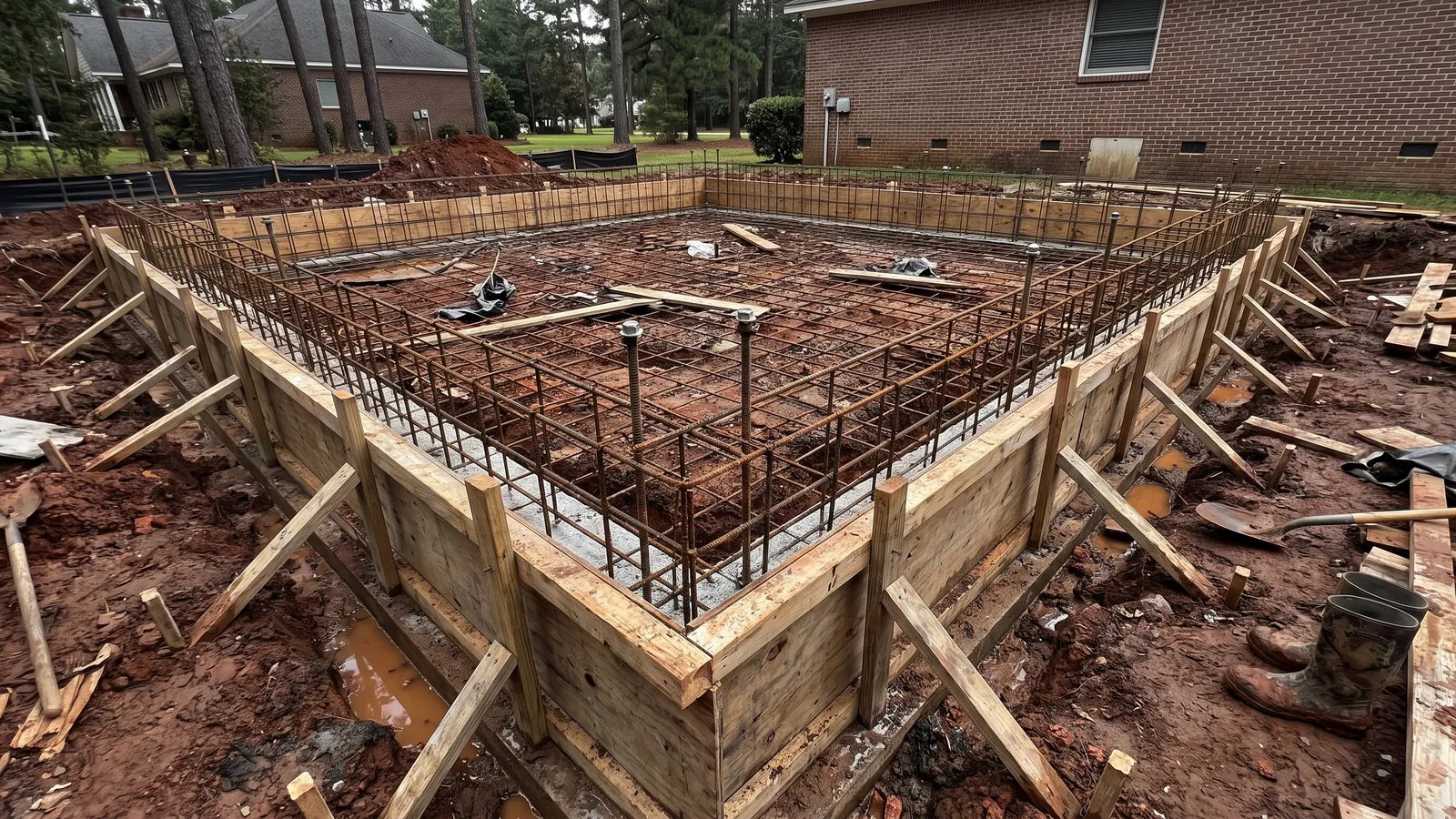
Foundations & additions
Footings, stem walls and addition slabs to Seismic Design Category D2, two feet above flood level where the maps say so, with the engineer's plan.
Foundations →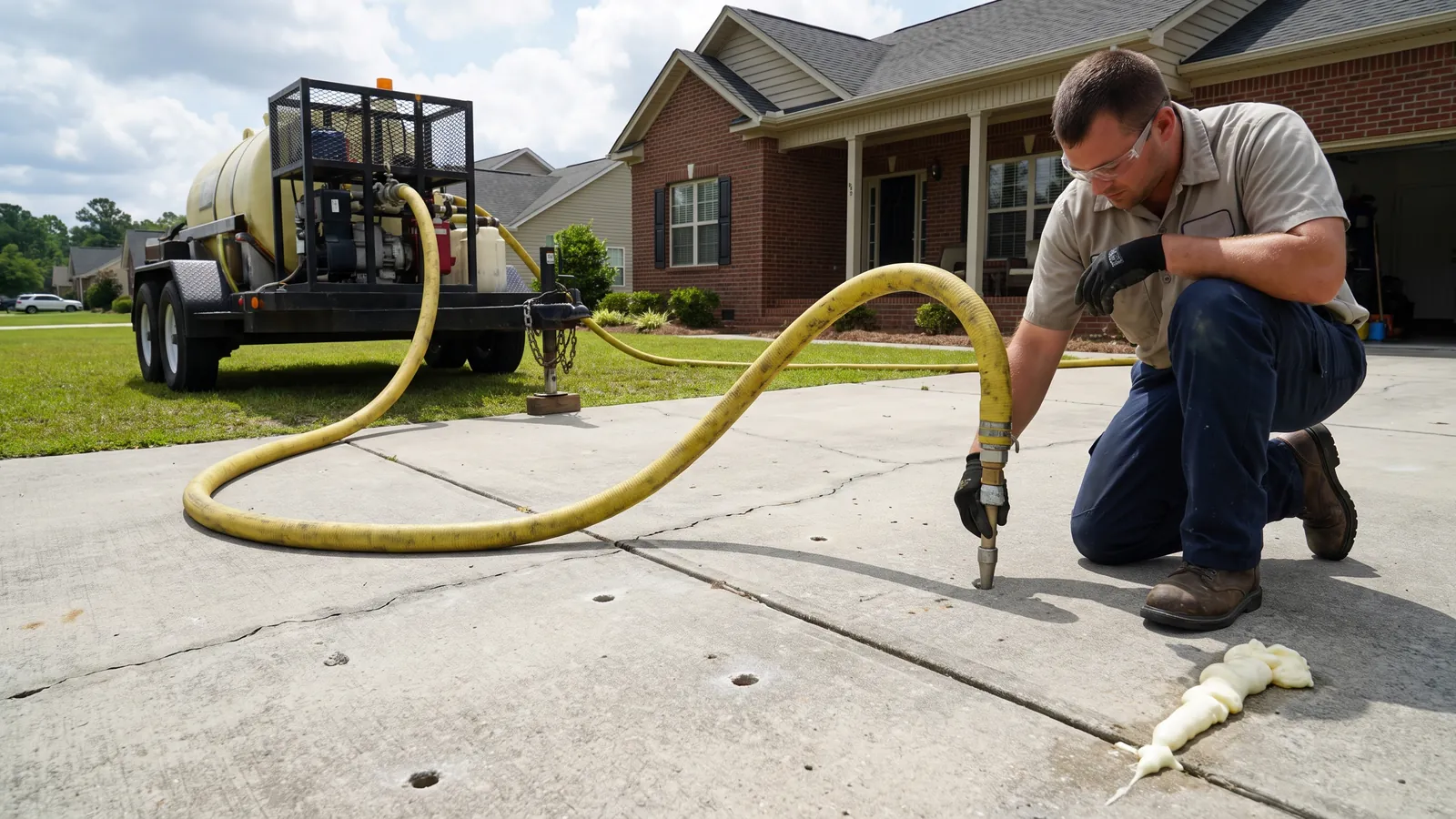
Repair & leveling
Foam lifting for sunken driveways, walks and pool decks on the Lowcountry's settling ground; crack repair; an honest fix-or-replace call.
Repair & leveling →Three numbers that decide most Summerville concrete jobs
A town that was a 19th-century health resort on the high sandy ground, a county where the soil survey says the water table is the main limitation for building, and a fault zone that produced the biggest earthquake in the history of the East Coast. These are the numbers that matter.
Depth to the water table, winter
The USDA soil survey of Dorchester County puts seasonal high water within 12 to 18 inches of the surface in the Rains, Coxville and Lynchburg soils that cover a third of the county, and says the Mouzon-Brookman-Wahee clays under another fifth have high shrink-swell potential. A slab poured on that without a compacted base, drainage and steel settles, heaves and cracks — which is what the builders did.
The 1886 earthquake, magnitude
Centered near Middleton Place on August 31, 1886, felt from Cuba to Boston, about 60 dead. The Middleton Place–Summerville seismic zone is still active — 34 quakes within 35 kilometers since 2021 — and the Town requires Seismic Design Category D2 for houses. Our footings and foundations are built to it.
The Ashley River's record, August 2024
Debby dropped 10 to 20 inches on Dorchester County, closed 75 roads, washed out I-26 near Ridgeville, and flooded Ashborough for about a week. Both counties require finished floors two feet above the base flood elevation. Flatwork can't be raised, but it can be graded, drained and placed to survive the next one.
Four things that keep our phone ringing
The builder driveway
Three and a half inches of concrete on a scraped lot with no base, no steel and the apron poured in the same day. Twenty years on it's cracked, sunk at the garage and holding water at the street.
Replacement →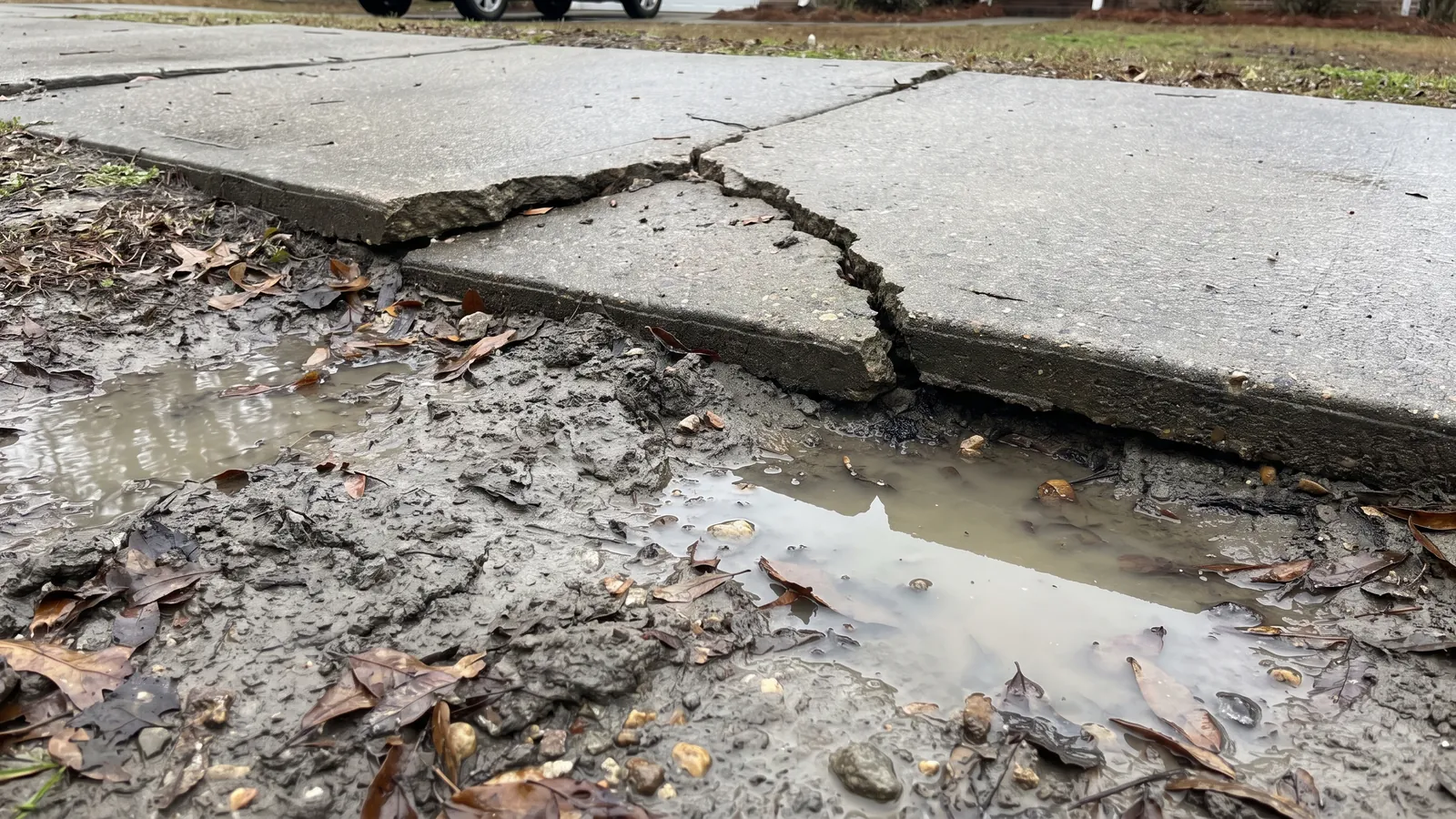
Heaved and sunken slabs
The Mouzon, Brookman and Wahee clays swell wet and shrink dry; the Rains and Coxville soils hold water a foot down. Walks lift in winter and drop in August. Foam lifting fixes the ones that can be saved.
Leveling →Washed-out aprons
An apron poured over a crushed or undersized culvert blocks the ditch, and the next Debby takes the apron with it. The county wants the pipe set at the ditch invert before anything is built.
Aprons →Footings that aren't D2
A slab-on-grade with a turned-down edge is fine in Ohio. Over the 1886 fault, the Town wants continuous footings, reinforcement, anchor bolts and the engineer's stamp. We build to the drawing.
Foundations →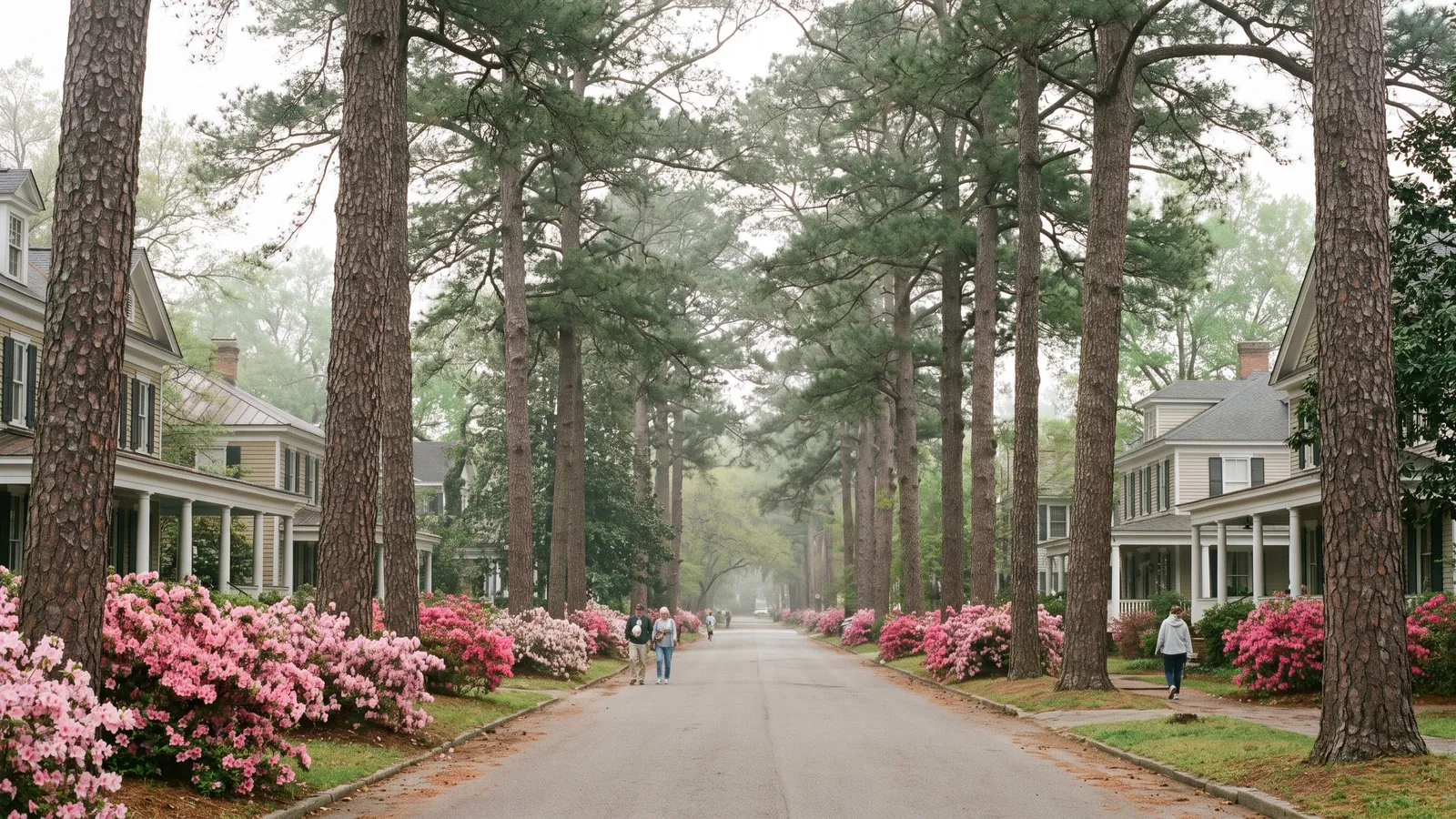
Summerville is a 19th-century health resort on a sand ridge, surrounded by the fastest-growing counties in South Carolina
The planters came up from the Ashley River plantations in the 1700s and built summer houses on the higher, well-drained soils in the community they later named Summerville — the county soil survey says so in as many words — and in 1887 a tuberculosis congress named it one of the two best places in the world for lung health, because of the pines. The historic district has been on the National Register since 1976, with some 700 structures and 70 percent of them pre–World War I; the Flowertown Festival brings a quarter million people to Azalea Park every April; the town claims the birthplace of sweet tea at the Pinehurst Tea Plantation of 1888. That's the Summerville on the brochure, and the ground under it is the easy part of our job.
The rest of the job is everything built since 2000. Summerville is 53,000 people across three counties now; Dorchester County grew 10.6 percent between 2020 and 2025, Berkeley County grew 19.5 percent — third-fastest of the state's 46 — and Moncks Corner grew 55 percent. The two counties permitted more than 20,000 single-family homes in those five years, at Nexton (5,000 acres, up to 7,500 homes), Cane Bay (4,500 acres, about 10,000 homes planned), Carnes Crossroads (2,300 acres, the NAHB's best master-planned community of 2025), Summers Corner, The Ponds and a hundred smaller tracts on the Rains and Lynchburg soils the planters avoided. Fifty-two percent of Summerville's homes were built after 2000, a third of them in 2000–09, and their driveways and patios are the thin builder slabs now cracking, sinking and holding water that fill our schedule.
Then the rules and the ground. Every new driveway needs approval from the Town, the county or SCDOT depending on whose road it is, and the Town won't issue a building permit without it. The Town counts every paved surface toward a 30 percent lot-coverage cap. Dorchester County prohibits driveways in easements in those words. The Town requires Seismic Design Category D2 because the biggest earthquake in East Coast history was centered a few miles from Main Street. Both counties want finished floors two feet above the flood elevation. The water table is a foot down in winter, the clays swell, it's over 90 degrees 72 days a year and freezes 45 nights. We do the boring things right: the base, the drainage, the steel, the joints, the permit, the inspection appointment the Town will make for a pour and nothing else — and we answer the phone.
Four steps, no surprises
Call or send the form
A cracked driveway, a patio you want, a pool deck pulling away, an addition that needs a foundation — tell us what you're seeing and what street you're on. We answer around the clock.
An estimator measures the job
Usually within a day or two. They measure, probe the ground, check the easements on the plat, work out whose road the apron is on, and run the lot-coverage math before anyone quotes.
Written, itemized price
Removal, base, thickness, reinforcement, finish, joints, the permit and its inspections — every line, good for 30 days. No deposit until you approve the price and we schedule.
Poured at first light, cured right
Pours start early so the slab sets before the heat. The Town's inspector is scheduled for the pour. Joints cut the same day, curing compound on, and you're driving on it in a week.
From the historic district and Ashborough to Nexton, Cane Bay and the whole Lowcountry
We're across Summerville every week: the historic district downtown with its Board of Architectural Review, Ashborough and Ashborough East on the Ashley River, Pine Forest and White Gables, Summers Corner and The Ponds, Knightsville, Lincolnville and the 17-A corridor.
Beyond the Town we cover Nexton, Cane Bay and Carnes Crossroads in Berkeley County, Sangaree and Ladson, Ridgeville and Givhans toward the Volvo plant, Goose Creek, Moncks Corner and the Charleston County edge toward North Charleston — three counties, each with its own permit office.
See the full service area →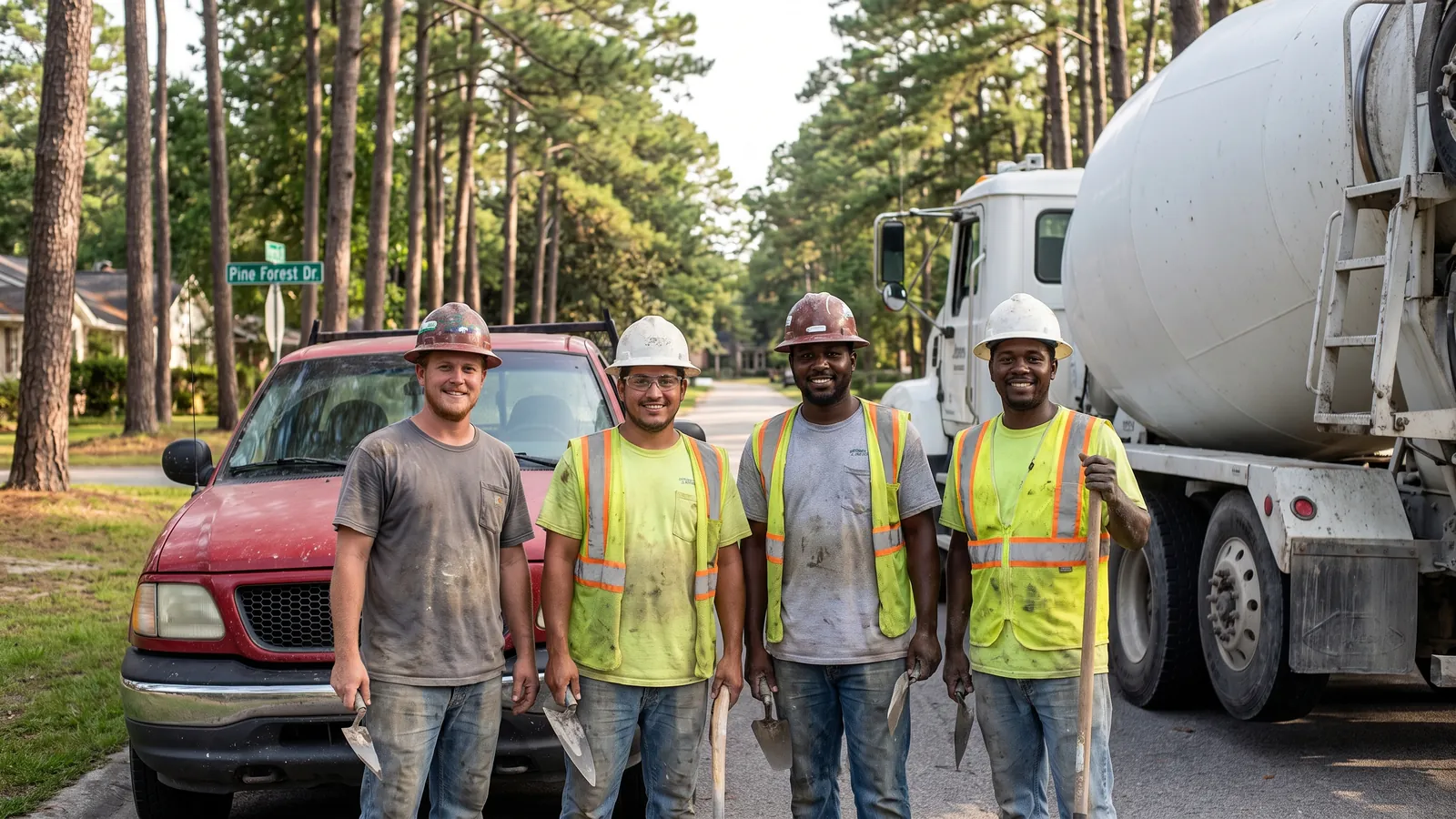
Questions Summerville homeowners ask us
How much does a concrete driveway cost in Summerville?
In 2026 a plain broom-finish driveway in the Summerville area runs about $7 to $11 per square foot installed and reinforced — so a typical two-car, 24-by-40 driveway is roughly $6,500 to $10,900, plus $1.20 to $1.90 a square foot to tear out the old one if there is one. A culvert-pipe apron on a county swale road adds the pipe and end sections; a Town curb cut adds the encroachment permit and inspection. Stamped concrete runs $10 to $17 a square foot. Every price we give is in writing after an estimator has measured the job and looked at the ground.
Do I need a permit for a driveway in Summerville?
Almost always, and whose permit depends on whose road. Inside the Town of Summerville a new driveway is approved by the Town, and a driveway into a Town-maintained street gets a $25 encroachment permit. If your street is a Dorchester County or SCDOT road, the county or the state issues the (free) encroachment permit — and the Town won't issue the building permit for a new house until that approval is in hand. Berkeley County (Nexton, Cane Bay) and Charleston County have their own. The Town also limits a curb cut to 12 feet on lots under half an acre and counts all paving toward the 30 percent lot-coverage cap. We check the road, pull the permit and draw the apron to spec; see the permit guide.
Why do slabs crack and sink so much around here?
Water and clay. The county's own soil survey says the high water table in most of the soils is the main limitation for building here — the Rains, Coxville and Lynchburg soils that cover a third of Dorchester County have water within a foot of the surface from November to April, and the Mouzon-Brookman-Wahee clays that cover another fifth have, in the survey's words, 'high shrink-swell potential.' Add 72 days a year over 90 degrees (a curing problem), 45 freezing nights (more than Charleston), 50-plus inches of rain and a builder's two-inch slab on a scraped lot, and you get the cracked, heaved, sunken driveways in every 2000s subdivision. We fix the base, the drainage and the thickness, not just the concrete.
Do you build foundations for the earthquake code?
Yes. The 1886 earthquake was centered near Middleton Place, a few miles from downtown — magnitude 7.03 by the USGS catalog, about 60 deaths, felt across 2.5 million square miles — and the fault zone is still active: the USGS has logged 34 quakes within 35 kilometers of Summerville since 2021, including a 3.3 near Ladson in September 2021 that 2,800 people reported feeling. The Town requires Seismic Design Category D2 for houses, which means engineered footings, continuous reinforcement, anchor bolts and ties that a slab in most of the country never needs. Our footings, stem walls and addition slabs are built to that standard, with the engineer's plan and the Town's inspection.
What's the lot-coverage rule I keep hearing about?
Summerville's zoning counts 'all paved surfaces' and everything under roof as impervious coverage, and caps it at 30 percent of the lot in the main residential districts (GR-2 and GR-3) and 35 percent in GR-5. A wide driveway, a big patio and a pool deck can put a house over the line, and the Town won't permit it. Pervious concrete is excluded from the impervious count — which is why we pour it, and why we draw the coverage math before we quote a patio. See pervious concrete.
Do you really answer at night?
24 hours a day, every day. A person picks up, takes your details, and you hear from an estimator the next morning — usually with an on-site visit the same week. If a slab has dropped under a car or a pool deck is pulling away from the pool, say so and we move it up.